Case study
Effluent monitoring in municipal wastewater treatment plant, Germany
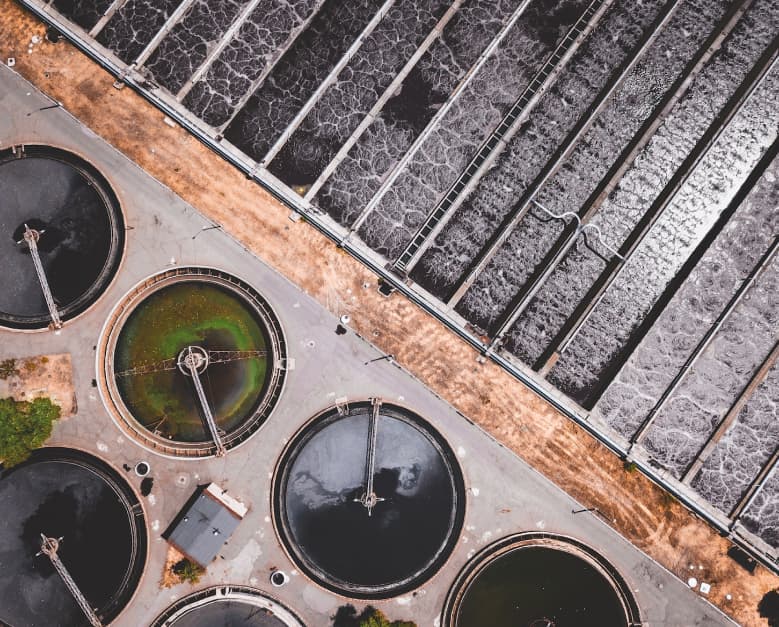

A 6-weeks nitrite and nitrate effluent monitoring project a the municipal wastewater treatment plant confirmed levels below the discharge limit throughout but also significant daily and seasonal changes that could form the basis for further process optimisation.
Background
Hauptklärwerk (HKW) Wiesbaden, serving a population of >250,000, is receiving and treating >50 million litres of wastewater every day before safe discharge into the Rhine. The deployment was aimed at testing our nitrate/nitrite sensors to monitor effluent levels to track operational efficiency and discharge level compliance.
The challenge
Currently most of the HKW's effluent monitoring is via sampling and remote lab analysis, which is labour intensive and limits the temporal resolution of measurement points. Typically Ntot is measured which includes NH4-N, NO3-N and NO2-N and has a combined discharge limit of 8 mg/L. The challenge was to see if SWS's nitrate/nitrite probes can accurately monitor NO3-N and NO2-N, with the following targets:
- Accuracy & precision: >90%
- Compatibility with effluent conditions & operability by HKW staff
- Autonomous discharge compliance monitoring
The solution
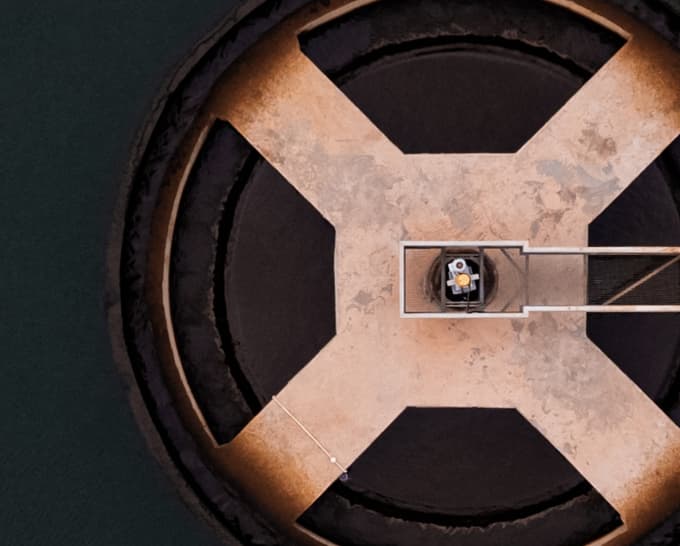
A SWS DropletSens™ NO3/NO2 sensor probe with 20 μm inlet filter was deployed in an effluent overflow chamber inside a measurement outbuilding on the HKW premise. Power and data handling was provided by a laptop. Throughout the 6-weeks deployment, the sensor was set to autonomously measure nitrate and nitrite levels in the effluent water every 10 seconds. Minimum every 2 days, QC checks with internal standard were autonomously performed. 49 spot samples and 41 24-hour-pooled samples were collected and analysed in the HKW lab for reference measurements. Apart form the initial set-up all maintenance was conducted by HKW staff.


The results
The deployment was successfully completed with the following sensor probe capabilities demonstrated:
- Accuracy: excellent alignment with lab based reference measurements. Repeatability based on >internal QC checks: +/- 4.3%
- Compatibility: operated without problems by HKW staff, including filter change after 4 weeks
- Discharge monitoring: combined NO3 & NO2 levels <6 mg/L throughout
Apart from confirming discharge compliance, the high-density monitoring data (>360,000 measurement points) revealed significant daily and seasonal variations in effluent levels which could form the basis for further process optimisation:
- Daily variation: (i) NO3/NO2 levels falling in the morning, (ii) minimum reached around mid-day, followed by (iii) steady increase to peak levels at around midnight [+/- 1 mg/L]
- Seasonal variation: (i) strong effluent level increases in run-up to Christmas, followed by (ii) steep reduction in January [+/- >3 mg/L]
Added NH4 -measurement capability and possible use of our online analyser format have been earmarked for further deployments.
Questions? We're here to help.